Angry Piglet: A Beginner-Friendly 3D Print
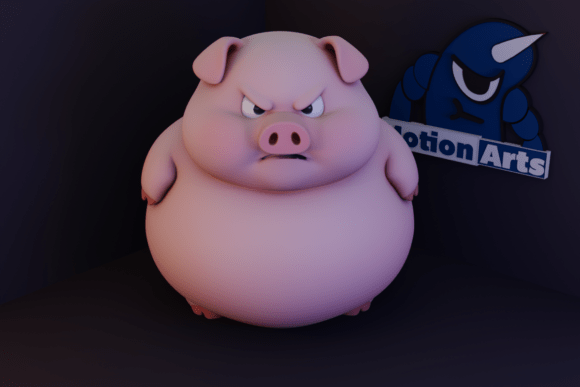
The Angry Piglet 3D model represents a specific intersection of character design and functional printability that is often difficult to find in free or entry-level repositories. For makers, educators, and small business owners exploring additive manufacturing, this cartoon-style piglet offers more than just a cute aesthetic; it serves as a practical benchmark for testing printer calibration, material flow, and post-processing techniques. The model features a rounded body with an intentionally angry expression, chubby cheeks, and small ears, creating a charismatic figure that stands out on shelves or desks. However, its true value lies in the engineering decisions behind the art. The smooth shapes and reinforced structure are designed specifically to mitigate common failure points associated with printing organic, cartoon-like forms.
Optimizing Print Success for New Makers
One of the primary challenges for beginners in 3D printing is managing geometry that lacks flat surfaces or vertical walls. Many character models fail because they have insufficient contact area with the build plate or overhangs that exceed the cooling capabilities of standard FDM printers. The Angry Piglet addresses these issues through a reinforced base and optimized mass distribution. While the character appears soft and rounded visually, the underlying mesh has been structured to ensure stability during the printing process. This makes it an ideal candidate for those who are still learning to tune bed adhesion, retraction settings, and cooling fans without risking hours of wasted filament on complex, high-risk geometries.
Despite being categorized as beginner-friendly, users must note that supports are required. This distinction is crucial for setting realistic expectations. The "beginner" rating refers to the model's structural integrity and lack of microscopic details that clog nozzles, not necessarily a support-free orientation. The supports needed for the Angry Piglet are generally predictable, primarily addressing the chin, snout, and ear overhangs. This provides a controlled environment for learning support generation and removal. Unlike complex mechanical assemblies where supports can become trapped inside cavities, this open cartoon form allows for straightforward cleanup, helping new users build confidence in their post-processing workflow.
Practical Applications Beyond Decoration
While the immediate appeal of the Angry Piglet is decorative, its utility extends into professional and educational contexts. For content creators and marketers, physical props offer tangible engagement opportunities that digital assets cannot replicate. A high-quality print of this character can serve as a mascot for a brand, a visual anchor in video content, or a unique giveaway at events. The striking, emotive face translates well to camera, and the smooth surface finish achievable with PLA or PETG requires minimal sanding to look professional in photographs. This reduces the turnaround time from digital file to usable asset, streamlining production schedules for freelancers and small studios.
In educational settings, particularly within STEAM programs or maker spaces, this model functions as an excellent teaching aid. Instructors can use the Angry Piglet to demonstrate concepts of volume, surface area, and center of gravity. The contrast between the character’s emotional expression and its geometric simplicity opens discussions about how form influences perception in design. Furthermore, because the model is robust, it can withstand handling by students during demonstrations or painting workshops. Educators appreciate assets that are durable enough for classroom use while remaining simple enough to print overnight for next-day lessons.
Material Selection and Surface Finish Considerations
The smooth, cartoon aesthetic of the Angry Piglet relies heavily on appropriate material choice and layer height selection. To achieve the intended playful look, users should prioritize materials that hide layer lines or respond well to smoothing techniques. Matte PLA is often superior to glossy variants for this specific model, as it diffuses light across the curved surfaces and minimizes the appearance of stepping artifacts. For those planning to paint the model, standard PLA provides an excellent primer-ready surface. The reinforced structure mentioned in the design specifications means the model is less prone to warping or delamination, which is particularly beneficial when using materials with higher shrinkage rates like ABS or ASA, though PLA remains the recommended starting point for beginners.
Users should also consider scale when preparing this file. The design maintains its proportions well across different sizes, but the level of detail in the facial expression dictates a minimum viable size. Printing too small may cause the nozzle to struggle with the transitions between the cheeks and eyes, resulting in a loss of the "striking look" that defines the character. Conversely, scaling up significantly increases print time and support material usage without necessarily adding visual value, given the intentional simplicity of the style. Finding the sweet spot—typically between 80mm and 120mm in height—balances print efficiency with visual impact.
Evaluating Fit for Commercial and Creative Projects
For entrepreneurs considering selling printed goods, it is essential to verify the licensing terms associated with the Angry Piglet model before commercializing. Beyond legalities, makers should assess whether this style aligns with their target market. The cartoon, slightly grumpy aesthetic appeals to a niche that enjoys whimsical, relatable character design rather than hyper-realism. It fits well alongside other stylized collectibles, desk accessories, or pop-culture adjacent merchandise. However, if your portfolio focuses on technical parts or architectural models, this asset may not serve your current business goals despite its printability.
When comparing this model to other character files available online, consider the trade-off between complexity and reliability. Highly detailed sculpted characters often require resin printing or advanced FDM tuning to capture texture. The Angry Piglet sacrifices micro-detail for macro-form, making it accessible to a wider range of hardware. This does not make it inferior; rather, it positions it as a high-yield, low-friction option for rapid prototyping of character concepts or batch production where consistency matters more than individual artistic nuance. If your goal is to test a new colorway, validate a support strategy, or produce a reliable gift quickly, this model outperforms more complex alternatives.
Post-Processing and Customization Opportunities
The smooth topology of the Angry Piglet invites customization. Because the surface area is continuous and free of excessive noise, it serves as an excellent canvas for airbrushing, hand painting, or even vinyl wrapping. Creators can modify the expression digitally using basic mesh editing tools to create variations—happy, sleepy, or surprised—without needing advanced sculpting skills, thanks to the simple underlying geometry. This modularity encourages iterative creativity, allowing users to build a collection or product line from a single base asset.
Support removal on this model requires care to preserve the smooth finish around the chin and ears. Using flush cutters close to the surface followed by light sanding with fine-grit paper usually yields seamless results. For users with access to vapor smoothing equipment or chemical smoothing agents compatible with their chosen filament, the rounded forms of the Angry Piglet respond exceptionally well, potentially achieving an injection-molded appearance. This capability transforms a simple beginner print into a premium-looking object, maximizing the return on time invested in the fabrication process.
Ultimately, the Angry Piglet succeeds because it respects the constraints of desktop manufacturing while delivering genuine character. It avoids the trap of designing solely for digital rendering, instead embracing the physical realities of layered fabrication. Whether you are a hobbyist seeking a satisfying weekend project, an educator needing durable teaching aids, or a creator looking for a customizable mascot, this model offers a balanced combination of charm, stability, and practical utility. By understanding its specific requirements regarding supports and material choices, users can leverage this design to improve their printing outcomes and expand their creative capabilities efficiently.