The Minimalist Bunny Vase: A Beginner’s Guide to 3D Printing Modern Home Decor
In the evolving world of additive manufacturing, the intersection of functional design and artistic expression has never been more accessible. Among the myriad of models available to makers and hobbyists, the Minimalist Bunny – Decorative 3D Vase stands out as a quintessential example of how digital fabrication can transform living spaces. This model is not merely a novelty item; it represents a sophisticated blend of aesthetic philosophy, structural engineering, and practical utility. For those new to 3D printing or seasoned enthusiasts looking for a reliable project, understanding the nuances of this specific design offers valuable insights into the broader capabilities of modern desktop manufacturing.
Understanding Minimalist Design in 3D Printing
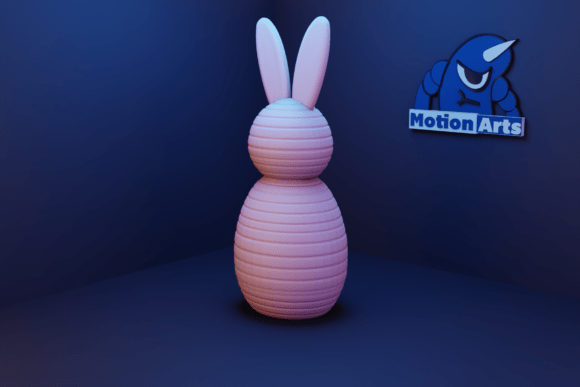
To fully appreciate the Minimalist Bunny vase, one must first understand the design principles that govern it. Minimalism in 3D printing is often mistaken for simplicity in execution, but it actually requires a high degree of intentionality. The model features soft horizontal lines that create a modern and elegant look, stripping away unnecessary ornamentation to focus on form and silhouette. This approach aligns with contemporary interior design trends that favor clean lines and organic shapes over cluttered aesthetics.
The horizontal ribbing serves a dual purpose. Aesthetically, it mimics the texture of turned wood or layered ceramics, providing visual interest through shadow and light rather than color or complex geometry. Functionally, these layers act as structural reinforcements. In 3D printing, smooth vertical walls can sometimes be prone to warping or layer separation depending on the material used. By introducing consistent horizontal undulations, the designer increases the surface area for layer adhesion and adds rigidity to the elongated form. This makes the object not only beautiful but also inherently more durable during the printing process and subsequent handling.
Engineering Stability for Beginners
One of the most significant barriers to entry for novice 3D printer users is print failure due to poor model geometry. The Minimalist Bunny addresses this challenge head-on with an elongated and well-balanced design that ensures stability. When selecting a 3D model, beginners often overlook the center of gravity. Tall, thin objects with heavy tops are notorious for detaching from the build plate or toppling over mid-print. This vase, however, is engineered with a weighted base and a tapered profile that keeps the mass low and centered.
This thoughtful engineering translates directly to higher success rates for those at the Beginner level. While the file is classified as entry-level, it teaches critical lessons about bed adhesion and Z-axis height management without the frustration associated with poorly optimized files. The balance between the artistic vision and mechanical constraints demonstrates that "beginner-friendly" does not have to mean "boring" or "basic." Instead, it signifies a model that has been refined to work harmoniously with standard FDM (Fused Deposition Modeling) printer capabilities.
The Role of Supports in Vase Mode Alternatives
A crucial technical specification for this model is the requirement for supports. It is important to clarify a common misunderstanding here: many users assume that all vases should be printed in "Vase Mode" (also known as Spiralize Outer Contour). However, the Minimalist Bunny is distinct because its stylized shape likely includes overhangs, ear structures, or internal geometries that a single continuous spiral cannot achieve. The notation Supports required indicates that this is a true sculptural form rather than a simple hollow cylinder.
For beginners, learning to manage supports is a vital skill. Using tree supports or organic supports is often recommended for this type of decorative piece. Unlike traditional blocky supports, tree supports branch out to touch the model only where necessary, reducing scarring on the visible surface and making post-processing significantly easier. Because the bunny features soft horizontal lines, removing supports requires care to preserve the delicate texture. Understanding when to use standard slicing settings versus specialized support configurations helps users bridge the gap between downloading an STL file and achieving a professional-grade finish.
Versatility: From Functional Vase to Themed Decor
The practical relevance of this 3D model lies in its duality. Marketed as a vase, it serves a functional role in home décor, capable of holding dried flowers, pampas grass, or lightweight fresh arrangements. However, its waterproofing depends entirely on the user's post-processing. Standard PLA prints are not watertight by default. Users intending to use this as a functional vessel for water should consider sealing the interior with food-safe epoxy resin or using a glass test tube insert. This distinction is vital for managing expectations and ensuring the longevity of the print.
Beyond its function as a vase, the piece excels as a themed decorative object. Its abstract nature allows it to fit into various seasonal contexts. During spring or Easter, it reads clearly as a bunny, fitting perfectly alongside traditional holiday decorations. Yet, because of its minimalist styling, it avoids looking kitschy or temporary once the season passes. Throughout the rest of the year, it functions as a standalone piece of modern art. This versatility makes it an excellent candidate for small businesses or Etsy sellers who need products with year-round appeal rather than single-use seasonal items.
Material Selection and Aesthetic Impact
While the STL file provides the geometry, the material choice defines the final character of the Minimalist Bunny. The soft horizontal lines interact differently with various filaments:
- Matte PLA: Highly recommended for this model. Matte filaments diffuse light, emphasizing the soft curves and hiding layer lines, which enhances the ceramic-like appearance intended by the designer.
- Silk or Shiny PLA: Creates a more glamorous, modern look but may highlight layer inconsistencies. The reflections can sometimes distract from the subtle horizontal texturing.
- Wood-Filled PLA: Offers a natural, rustic aesthetic that pairs beautifully with the organic shape, though it may require larger nozzle sizes and careful retraction tuning.
- PETG or ABS: Better suited for functional use due to higher heat resistance and durability, though they can be stringier and harder to post-process cleanly compared to PLA.
Selecting the right material is part of the creative education process. Beginners are encouraged to start with matte white or beige PLA to replicate the look of unglazed pottery, which aligns best with the minimalist ethos.
Educational Value and Skill Building
Printing the Minimalist Bunny is an exercise in comprehensive 3D printing fundamentals. It moves beyond the calibration cube phase and introduces real-world variables. Users must consider orientation to minimize visible support marks, adjust wall counts to ensure the vase is sturdy enough to hold weight, and tune cooling fans to prevent sagging on the horizontal ridges. Each of these decisions contributes to a deeper understanding of how slicer software translates digital data into physical objects.
Furthermore, this model serves as an excellent introduction to post-processing techniques. Sanding horizontal lines requires a different approach than sanding flat surfaces; flexible sanding sponges become essential tools. Painting or priming such a textured surface teaches users about filler primers and spray techniques. These skills are transferable to virtually every other aspect of the hobby, from cosplay props to prototyping functional parts.
Integrating 3D Printed Decor into Modern Life
The rise of models like the Minimalist Bunny reflects a broader shift in how we consume and create home goods. In an era of mass production, 3D printing offers a return to customization and mindful consumption. Rather than purchasing a generic decoration manufactured overseas, users invest time and electricity to create something unique. This process fosters a stronger connection to the objects in our environment. It also supports sustainability; if the print fails or the style changes, the plastic can theoretically be recycled or repurposed, unlike mixed-material commercial decor.
For educators and workshop leaders, this model is a perfect teaching aid. It is engaging enough to maintain student interest yet forgiving enough to allow for learning through iteration. It bridges the gap between STEM (engineering and technology) and STEAM (adding Arts), demonstrating that technical proficiency and artistic sensibility are not mutually exclusive. Whether used in a classroom setting, a maker space, or a home studio, the Minimalist Bunny vase exemplifies the democratization of design, proving that elegant, functional art is within reach of anyone with a spool of filament and a willingness to learn.