Evaluating the Bow Scallop Oval Badge Reel Topper for Professional Personalization
In healthcare, education, and corporate environments, identification badges serve a critical security function, yet they often lack individual expression. The Bow Scallop Oval Badge Reel represents a specific niche within professional accessories: a 3D-printable modification designed to soften the utilitarian aesthetic of standard ID reels. Unlike mass-produced plastic charms or enamel pins that clip onto lanyards, this oval scallop design functions as a direct interface with the badge reel mechanism itself. For professionals aged 20 to 50 seeking to balance workplace compliance with personal style, understanding the practical distinctions between this digital fabrication resource and traditional alternatives is essential for making an informed choice.
Defining the Bow Scallop Oval Design and Utility
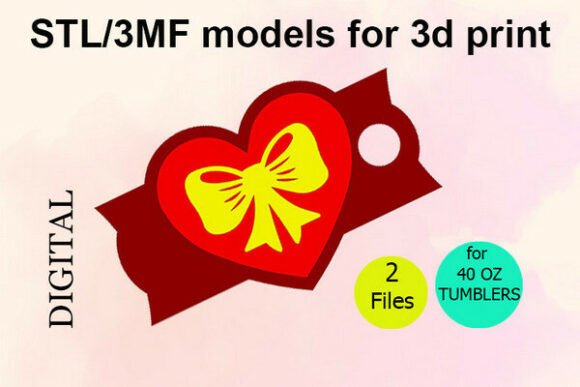
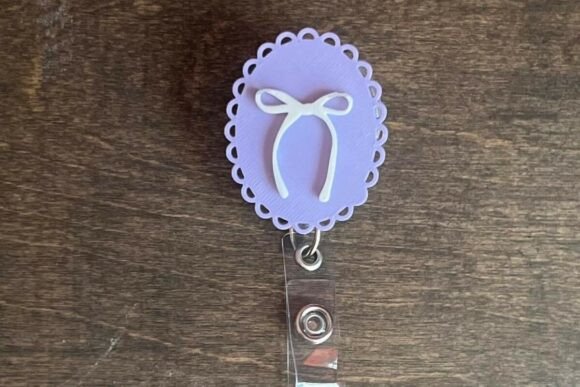
The Bow Scallop Oval Badge Reel is not a finished retail product but rather a digital STL file package intended for additive manufacturing. Its primary value proposition lies in customization and fitment. The design features a decorative bow motif integrated into a scalloped oval frame, specifically engineered to accommodate standard badge reel mechanisms. With approximate dimensions of 1.850 inches in height and 1.4 inches in width, it provides substantial visual coverage without exceeding typical uniform guidelines regarding accessory size.
What distinguishes this specific format is its adaptability to different printing technologies. The resource typically includes two distinct file sets: one optimized for multi-color printing systems (such as AMS) and another containing individual parts for post-processing assembly. This dual-approach acknowledges that users possess varying levels of hardware capability. The back plate thickness of 3mm is a deliberate engineering choice, providing enough structural integrity to withstand daily retraction forces while remaining lightweight enough not to drag down lighter scrubs or blouse fabrics. When evaluating this option, it is crucial to recognize that the final quality depends entirely on the user’s printing parameters and finishing skills, unlike injection-molded commercial products which offer consistent, albeit static, results.
Comparing Digital Fabrication to Commercial Alternatives
When considering how to personalize work identification, professionals generally choose between three categories: vinyl decals, commercial charm clips, and 3D printed toppers like the Bow Scallop Oval. Each category presents distinct tradeoffs regarding durability, aesthetics, and effort.
Vinyl Decals and Stickers: These are the lowest-barrier entry point. They are inexpensive and require no technical skill. However, they sit flush against the reel face and are prone to peeling, scratching, or fading after repeated sanitization cycles common in medical settings. They lack the tactile depth and premium feel of a physical object.
Commercial Charm Clips and Enamel Pins: Mass-produced metal or acrylic charms offer high durability and professional polish. They attach via lobster clasps or magnetic backs. The limitation here is selection; designs are generic, and finding a specific aesthetic like a scalloped bow may be impossible. Furthermore, dangling charms can pose safety hazards in clinical environments where snagging on equipment or patients is a risk. The Bow Scallop Oval mitigates this by adhering directly to the reel housing, eliminating swing and reducing catch points.
3D Printed Toppers: This category occupies the middle ground. It offers the dimensional presence of commercial products with the bespoke nature of custom art. The tradeoff is labor. While a sticker takes seconds to apply and a pin requires only clipping, the Bow Scallop Oval requires printing, potential painting or gluing, and adhesive curing time. For those who value uniqueness over convenience, this tradeoff is acceptable. For those needing an immediate solution before a shift starts tomorrow, commercial options remain superior.
Technical Considerations and Material Selection
For those deciding to proceed with the Bow Scallop Oval Badge Reel, material selection significantly impacts longevity and appearance. The recommended filaments are PLA or ABS, but the application environment should dictate the final choice.
- PLA (Polylactic Acid): Ideal for detailed prints and vibrant colors. It is easy to print and biodegradable. However, PLA has low heat resistance. In hot environments or if left in a car during summer, PLA toppers may warp or deform. It is best suited for climate-controlled offices or schools.
- ABS (Acrylonitrile Butadiene Styrene): Offers superior durability and heat resistance. It can withstand harsh cleaning chemicals and higher temperatures without deforming. The tradeoff is print difficulty; ABS requires an enclosure and proper ventilation due to fumes. For healthcare workers frequently using alcohol-based sanitizers, ABS or PETG (a compatible alternative often used in place of ABS) may provide better long-term resilience than PLA.
The assembly method also warrants comparison. The inclusion of separate STL files for glue assembly suggests a layer-painting or multi-part coloring approach. This allows for sharper color transitions than single-nozzle printing but introduces structural weak points at the glue joints. Users must ensure complete adhesion between the decorative face and the 3mm backing plate. A failure here could result in the decoration detaching from the functional reel mount during use. Conversely, AMS-compatible files eliminate glue joints but require expensive hardware. Evaluating your current equipment against the desired finish quality is a necessary step before acquisition.
Fitness for Purpose: When to Choose This Option
The Bow Scallop Oval Badge Reel is not universally the best solution. Its suitability depends on specific professional contexts and personal preferences.
Ideal Use Cases:
- Pediatric Healthcare and Education: The soft, rounded scallop edges and bow aesthetic are non-threatening and approachable, making them excellent for child-facing roles where reducing anxiety is part of the job.
- Makers and Hobbyists: Professionals who already own 3D printers will find this to be a cost-effective way to produce gifts for colleagues or customize their own gear for pennies in filament cost.
- Strict Uniform Codes: Facilities that prohibit dangling jewelry or loose accessories often allow flat-mounted reel toppers. This design adheres to safety standards while still permitting self-expression.
Less Suitable Scenarios:
- High-Sterility Environments: Unless sealed with food-safe epoxy or printed in specialized sterilizable materials, FDM 3D prints have layer lines that can harbor bacteria. In ORs or ICUs with strict infection control protocols, smooth, sealed commercial badges are safer.
- Corporate Formal Settings: While stylish, a 3D printed bow may read as too casual or craft-oriented for conservative law firms or executive banking roles. Metal or leather accessories typically align better with formal dress codes.
- Time-Constrained Needs: If you need a replacement immediately, the download-print-finish workflow is too slow. This is a planned customization, not an emergency fix.
Installation and Long-Term Maintenance
Proper installation determines whether the Bow Scallop Oval remains a cherished accessory or becomes a frustration. The standard attachment method involves superglue (cyanoacrylate). Before bonding, both the badge reel surface and the topper back must be cleaned with isopropyl alcohol to remove oils and release agents. Roughening the reel surface slightly with fine sandpaper can increase mechanical grip, as many reels have smooth, glossy finishes that resist adhesion.
Users should verify the reel diameter before printing. The design targets standard 1.26-inch reels, but manufacturers vary. Printing a test slice or measuring carefully prevents wasted material. Once attached, allow full cure time—typically 24 hours for maximum bond strength—before subjecting the reel to retraction tension.
Maintenance differs from commercial products. Avoid soaking the topper in liquid cleaners, as moisture can wick into layer lines and degrade adhesives over time. Wipe cleaning is preferred. Monitor the bond periodically; thermal cycling from body heat and environmental changes can stress the glue joint. If detachment occurs, clean old adhesive thoroughly before re-bonding. Understanding these maintenance requirements ensures the Bow Scallop Oval Badge Reel serves as a durable, charming enhancement to professional attire rather than a temporary novelty.