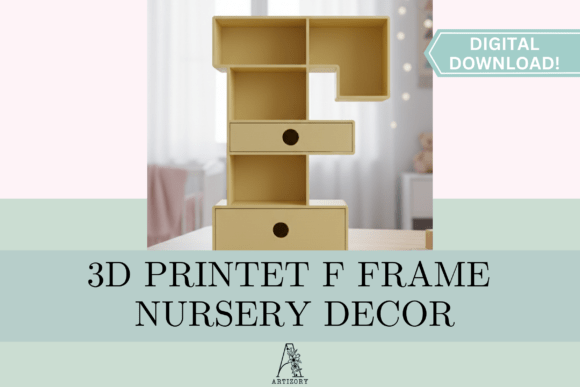
Letter F Shelf Organizer STL: Functional 3D Print
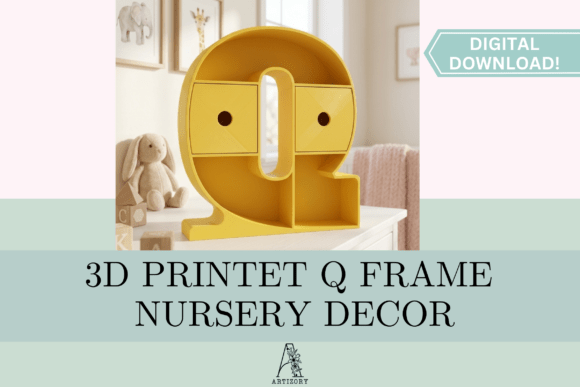
Personalized organization has moved beyond simple labels and into the realm of functional art. The Letter F Shelf Organizer STL represents a shift in how we approach monogram decor, transforming a static initial into a usable storage solution. This 3D print file is engineered specifically for FDM printers, featuring an integrated drawer that maintains a clean, modern aesthetic while providing genuine utility. Unlike decorative letters that simply sit on a surface, this design serves as a cubby for small items, making it a practical addition to nurseries, offices, and living spaces.
For those exploring the intersection of typography and function, this model offers a specific advantage: it fits within a standard 25x25 cm print bed. This compatibility ensures that users with common entry-level or mid-range printers can produce a professional-grade result without needing large-format equipment. The design prioritizes printability, requiring minimal supports restricted only to the drawer handle area. This thoughtful engineering reduces post-processing time and material waste, allowing the focus to remain on the final product's quality rather than cleanup.
Different Priorities for Diverse Makers
A single STL file often serves multiple masters, and the value of this Letter F storage unit shifts depending on who is hitting "print." Understanding these distinct perspectives helps determine if this specific design aligns with your current objectives, whether you are printing for profit, education, or personal satisfaction.
Small Business Owners and Etsy Sellers
For entrepreneurs running a 3D printing business or a personalized gift shop, reliability and scalability are paramount. You are not just looking for a cute design; you need a product that prints consistently with zero failed layers. This Letter F Shelf Organizer STL is optimized for commercial production cycles. The minimal support requirement means you can batch print units with reduced risk of adhesion failures or scarring on visible surfaces.
From a catalog perspective, this file is part of a functional alphabet series. This modularity allows businesses to offer custom name sets or initial combinations without redesigning from scratch. Customers seeking nursery decor often want cohesive styling across multiple letters, and having a standardized connection point or visual language across the alphabet series ensures that an "F" printed today matches an "A" printed six months ago. The sturdy construction also reduces return rates due to breakage during shipping, protecting your profit margins and reputation.
Educators and Classroom Managers
In educational settings, durability and safety take precedence over intricate aesthetics. Teachers and librarians evaluating this Letter F shelf organizer are likely looking for robust storage that can withstand daily handling by children. The FDM-optimized geometry provides thick walls and solid infill opportunities, creating a container that resists cracking when dropped or overloaded with crayons, erasers, or flashcards.
Beyond storage, this object serves as a tactile learning aid. For early childhood educators, combining literacy with physical interaction reinforces letter recognition. A student placing objects inside the "F" drawer creates a multisensory association that flat flashcards cannot replicate. Because the design uses standard printer settings, schools with maker spaces can involve students in the manufacturing process, turning the creation of classroom supplies into a STEM lesson on additive manufacturing and design thinking.
Hobbyists and Home Organizers
For the individual maker, the priority is often a balance between challenge and reward. Beginners may feel intimidated by complex mechanical prints, but this Letter F organizer acts as an excellent intermediate project. It introduces moving parts (the drawer) without requiring assembly of separate components or hardware like screws and springs. Successfully printing this functional piece builds confidence in tolerances and bridging techniques.
Home organizers and parents appreciate the specific dimensions and minimalist look. Nursery shelves often become cluttered with mismatched bins; a monogrammed cubby integrates storage into the room’s theme seamlessly. Whether holding pacifiers, jewelry, or office stationery, the drawer mechanism keeps small items contained and dust-free. For hobbyists, the ability to customize filament colors allows the shelf to match existing decor perfectly, something mass-produced plastic organizers rarely offer.
Technical Considerations for Optimal Results
Achieving a professional finish with this Letter F Shelf Organizer STL requires attention to specific printing parameters. While the file is designed for ease of use, understanding the "why" behind the settings improves outcomes across different printer models.
- Bed Adhesion and Size: Confirm your build plate is exactly 250mm x 250mm or larger before slicing. If using a textured PEI sheet, ensure the first layer squish is calibrated correctly, as the letter’s footprint relies on consistent adhesion to prevent warping at the base corners.
- Support Strategy: Supports are necessary only for the drawer handle overhang. Use tree supports or organic supports if available in your slicer to minimize contact points. This reduces the sanding required after removal and preserves the smooth finish of the handle underside.
- Wall Count and Infill: For structural integrity, especially if the shelf will hold weighted items like books or glass jars, increase wall loops to at least three or four. A gyroid or cubic infill pattern at 15-20% provides sufficient internal support without excessive print time.
- Tolerance Checks: Drawer fitment depends heavily on your printer’s flow rate and horizontal expansion settings. If the drawer feels too tight, adjust the horizontal hole expansion in your slicer rather than scaling the entire model, which could alter the external dimensions and aesthetic proportions.
Evaluating Fit for Your Next Project
Before downloading or purchasing, consider how this specific Letter F design intersects with your goals. Not every 3D print file suits every need, and identifying mismatches early saves filament and frustration.
If your primary goal is rapid prototyping or testing new materials, this functional organizer provides immediate feedback on dimensional accuracy and layer adhesion under stress. However, if you require waterproof storage or food-safe containment, remember that FDM prints have inherent layer lines that can harbor bacteria unless properly sealed with food-safe epoxy. This shelf is ideal for dry goods, toys, and office supplies, but less suitable for direct food contact.
For creators building a brand around personalized home goods, evaluate the licensing terms associated with the STL. Ensure the file permits commercial sale of physical prints if that is your intent. Additionally, consider the post-processing workflow. Does the minimal support structure align with your finishing capabilities? If you lack sanding tools or patience for cleanup, verify that your printer can achieve a clean breakaway on the handle supports before committing to a large production run.
Ultimately, the Letter F Shelf Organizer STL bridges the gap between digital design and physical utility. It offers a tangible solution for organization while serving as a versatile platform for business growth, educational engagement, and personal creativity. By matching the technical attributes of the file with your specific audience needs—whether that is a parent organizing a nursery or a seller expanding their inventory—you ensure that the final print delivers real-world value beyond the novelty of 3D printing.