Designing Retail Impact with the Hanging Tab Scalloped Closure Pouch Box
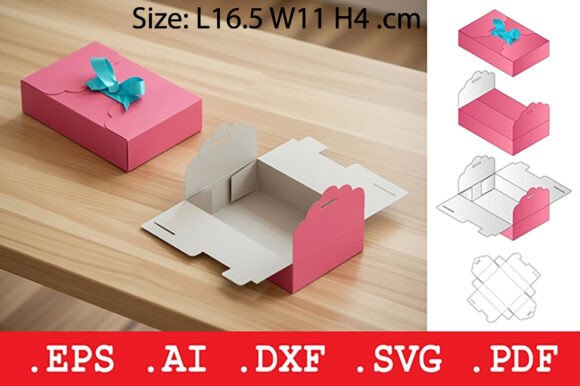
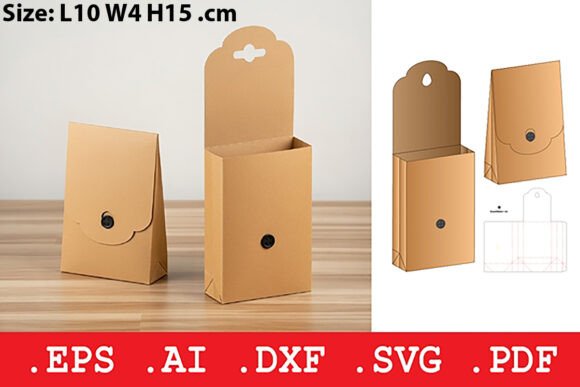
In the competitive landscape of small-item retail and artisanal gifting, packaging serves as the primary interface between a product and its potential owner. The Hanging Tab Scalloped Closure Pouch Box represents a specific intersection of structural engineering and aesthetic appeal, designed to solve common merchandising challenges while elevating the unboxing experience. Unlike standard folding cartons or simple poly bags, this template integrates a display mechanism directly into the package architecture. The defining feature is the scalloped header, which provides a decorative silhouette that distinguishes the item on crowded pegboards, combined with a functional button closure that eliminates the need for adhesives during assembly.
This packaging format is engineered specifically for lightweight substrates, optimizing performance within the 200 to 350 gsm range. This material specification is critical; cardstock below this threshold may lack the rigidity required for the button snap to hold securely, while board exceeding this weight can result in bulky folds and difficulty in achieving crisp creases without industrial scoring equipment. When executed correctly, the resulting pouch offers a premium tactile feel that suggests quality before the consumer even interacts with the contents. For business owners and creators, understanding the mechanical nuances of this design is essential for maximizing both production efficiency and shelf presence.
Mechanical Assembly and Adhesive-Free Construction
The most significant operational advantage of the Hanging Tab Scalloped Closure Pouch Box is its glue-free assembly protocol. Traditional packaging often requires hot melt glues, double-sided tape, or liquid adhesives to secure side panels and bottom gussets. These consumables add cost, create mess, and introduce curing time into the fulfillment workflow. In contrast, this template utilizes a tuck-and-button system that relies entirely on paper tension and friction.
The assembly process begins with pre-creasing all fold lines. For hand production, a bone folder or scoring stylus ensures sharp edges that contribute to the structural integrity of the finished box. The side tabs are inserted into their corresponding slots, creating a three-dimensional form. The security of the package depends on the precision of the button closure mechanism integrated into the top flap. This tab features a die-cut hole that aligns perfectly with a protruding button element on the front face of the pouch. When engaged, the paper’s natural elasticity creates a locking action that keeps the pouch sealed during handling yet allows for easy reopening by the end-user.
This mechanical lock offers distinct advantages for inventory management. Products can be packed flat and assembled on-demand, reducing storage space requirements. Furthermore, the absence of adhesives makes the packaging inherently more sustainable and easier to recycle, as there are no plastic tapes or chemical residues contaminating the paper stream. For small businesses operating out of home studios or shared maker spaces, this clean assembly method significantly reduces workspace contamination and setup time.
Material Selection and Substrate Performance
Achieving the intended elegance and durability of the Hanging Tab Scalloped Closure Pouch Box requires careful material selection. The recommended 200-350 gsm range encompasses various paper types, each imparting different characteristics to the final product. Understanding these differences allows designers to match the substrate to the specific application.
- Uncoated Cardstock (250-300 gsm): Ideal for stationery, jewelry, and organic products. The porous surface accepts stamps, embossing, and handwriting beautifully. It offers excellent friction for the button closure, ensuring a tight seal. However, it is more susceptible to moisture and fingerprint oils.
- C1S (Coated One Side) Board (250-350 gsm): The industry standard for cosmetic samples and food treats. The coated exterior allows for vibrant printing and scuff resistance, while the uncoated interior maintains a natural feel against the product. The coating can sometimes make the button closure slightly slicker, requiring precise die-cutting tolerances.
- Kraft Paperboard (200-250 gsm): Best for rustic aesthetics and eco-conscious branding. Kraft fibers are typically longer and stronger than bleached pulp, providing superior tear resistance at lower weights. This makes it an excellent choice for heavier items like metal hardware or dense confections where structural failure is a risk.
- Textured Linen or Felt Stock: Used for luxury gifts and high-end accessories. The texture adds immediate perceived value but can complicate digital printing. These stocks often have higher bulk calipers, meaning a 250 gsm textured sheet may physically measure thicker than a smooth 300 gsm sheet, affecting fold accuracy.
Grain direction is another technical consideration often overlooked in pouch design. For optimal folding and button retention, the grain should run parallel to the vertical axis of the pouch. Folding against the grain can cause cracking on coated stocks and weaken the structural memory of the box, leading to a pouch that bulges rather than standing upright cleanly.
Digital Fabrication and File Format Utilization
The versatility of the Hanging Tab Scalloped Closure Pouch Box extends across multiple production methods, facilitated by a comprehensive suite of digital files. Each format serves a distinct purpose in the manufacturing ecosystem, from prototyping to mass production.
Vector Formats for Cutting and Prototyping
The .DXF (Drawing Exchange Format) file is the universal language for CNC routers and laser cutting systems. This format preserves exact geometric data without styling attributes, ensuring that the machine interprets cut lines and score lines accurately. When using laser cutters, operators must distinguish between vector cuts for the outline and button holes versus raster engraving or lower-power vector scoring for fold lines. The .SVG (Scalable Vector Graphics) file caters to the craft market and desktop fabrication. Compatible with Cricut, Silhouette, and Brother ScanNCut machines, SVG files allow hobbyists and micro-businesses to produce short runs without industrial tooling. Because SVG is XML-based, it remains editable in web browsers and design software, facilitating quick modifications to dimensions or decorative elements.
Print Production Standards
For commercial printing, the .EPS (Encapsulated PostScript) and .AI (Adobe Illustrator) files provide the necessary fidelity. EPS is the preferred delivery format for print shops using non-Adobe RIP software, as it encapsulates fonts and vectors reliably. The native .AI file retains layer structure, spot color channels, and dieline separations, allowing professional printers to adjust bleed, registration marks, and varnish layers without reconstructing the artwork. The included PDF serves as a universal proofing document, enabling stakeholders to visualize the flat layout and folded state without specialized software. This multi-format approach ensures that whether a user is cutting a single prototype on a kitchen table or running 10,000 units through an offset press, the geometric integrity of the scalloped closure remains consistent.
Strategic Merchandising and Application Versatility
The form factor of the Hanging Tab Scalloped Closure Pouch Box addresses specific retail pain points related to visibility and accessibility. Small items are notoriously difficult to merchandise; they get lost on shelves, require expensive display fixtures, or suffer from theft due to their size. The integrated hang tab transforms any vertical surface into prime real estate. Pegboards, slat walls, wire racks, and even temporary market displays become viable venues. The scalloped shape acts as a visual interrupt, breaking the monotony of rectangular headers and drawing the eye through negative space and curved geometry.
Beyond retail, this packaging excels in direct-to-consumer applications. For e-commerce sellers, the pouch serves as protective secondary packaging within a shipping mailer. The button closure prevents items from shifting during transit, while the compact profile minimizes dimensional weight charges. In the cosmetics sector, it functions effectively for sample kits or travel-sized products, where the ability to reseal the package adds utility for the traveler. Jewelers appreciate the tuck-in design for keeping chains untangled and earrings paired, while stationery brands utilize the flat interior surfaces for inserting instruction cards or brand storytelling elements.
Educational and event-based use cases also benefit from this design. Conference organizers can use these pouches for badge holders or welcome kits, leveraging the hang tab for lanyard attachment. Teachers and educators find them ideal for organizing manipulatives, art supplies, or student rewards. The ease of assembly allows students themselves to participate in the packaging process as part of vocational training or art projects, teaching principles of geometry, material science, and product design simultaneously.
Customization and Brand Integration Considerations
While the structural template provides the foundation, successful implementation requires thoughtful customization. The scalloped header offers a unique canvas for brand identity. Rather than placing logos centrally, designers often utilize the curves of the scallop to frame typography or create window cutouts that reveal the product inside. Window patches made from biodegradable cellulose acetate can be adhered to the interior, maintaining the recyclability of the package while adding product visibility.
Color psychology plays a role in material choice as well. White stock conveys cleanliness and modernity, suitable for clinical skincare or tech accessories. Natural kraft suggests sustainability and authenticity, appropriate for baked goods or handmade crafts. Black or dark-colored stocks imply luxury and exclusivity but require opaque white ink underprinting or foil stamping to achieve legibility. When customizing the Hanging Tab Scalloped Closure Pouch Box, it is vital to test print colors on the actual chosen substrate, as uncoated papers absorb ink differently than coated surfaces, potentially muting vibrant brand colors.
Functional customization should not be overlooked. Depending on the product weight, the size of the button tab and the diameter of the engagement hole may need adjustment. Heavier items require a larger contact surface area to prevent the button from tearing through the paper over repeated use. Conversely, delicate items may benefit from a smaller, more refined closure mechanism. Testing prototypes with the actual product loaded is the only way to validate these tolerances. This iterative refinement process ensures that the final packaging is not merely a container, but a reliable, functional component of the product experience that enhances perceived value and supports brand objectives across diverse markets.