Petal Closure Square Gift Box: Elevating Packaging Through Structural Design
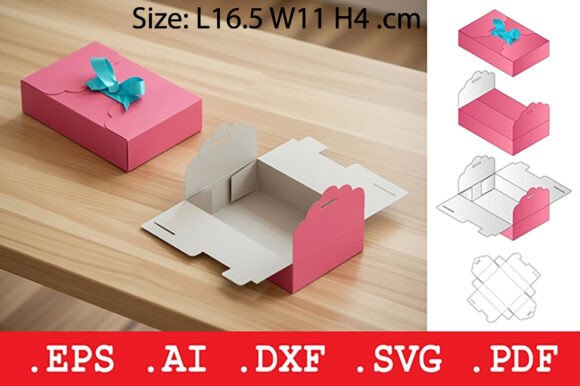
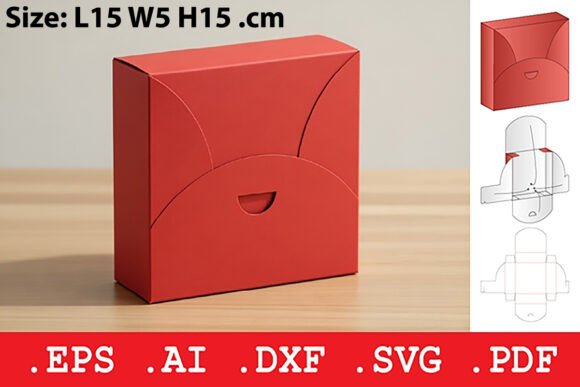
In the competitive landscape of boutique retail and artisanal goods, packaging has transcended its traditional role as a mere protective vessel. It is now a critical component of brand identity and customer experience. The Petal Closure Square Gift Box represents a sophisticated intersection of structural engineering and aesthetic elegance, offering a solution that feels as luxurious as the products it houses. This template features a square body distinguished by a unique overlapping petal-style closure that locks securely into place via a subtle semi-circle tab. Unlike standard tuck-end boxes or glued sleeves, this design relies entirely on geometric precision to maintain its form, creating a premium, flower-like appearance that signals quality before the recipient even sees the contents.
For creators, jewelers, and luxury confectioners, the relevance of this specific dieline lies in its ability to merge functionality with high-end visual appeal without requiring industrial assembly lines. The elegant curved lines of the lid provide a soft, organic contrast to the rigid square base, making it particularly suitable for jewelry, artisan chocolates, wedding favors, and limited-edition cosmetics. In an era where consumers document their purchases on social media, the tactile satisfaction and visual distinctiveness of adhesive-free assembly contribute significantly to perceived value and shareability.
The Shift Toward Adhesive-Free Structural Integrity
Modern packaging trends are increasingly driven by sustainability and user experience. There is a growing preference among both manufacturers and consumers for designs that minimize chemical adhesives and maximize material efficiency. The Petal Closure Square Gift Box aligns perfectly with this shift. By utilizing an interlocking tab system rather than glue, the box supports eco-friendly initiatives while solving practical production challenges for small businesses.
Adhesive-free assembly offers distinct advantages in contemporary workflows. For home-based entrepreneurs and small studios, eliminating glue reduces mess, curing time, and potential product contamination. From a sustainability perspective, boxes without synthetic glues are often easier to recycle or compost, as they lack mixed-material bonding agents. Furthermore, the structural integrity provided by the semi-circle tab ensures that the box remains secure during transit and handling, debunking the myth that sustainable packaging must be fragile. This mechanical lock creates a "snap" sensation upon closing, adding an auditory and tactile cue of security that enhances the unboxing ritual.
Enhancing the Unboxing Experience
The unboxing experience has become a pivotal moment in the customer journey. When a recipient interacts with a Petal Closure Square Gift Box, the overlapping petals require a deliberate, gentle motion to open, mimicking the blooming of a flower. This interactive element slows down the consumption process, encouraging mindfulness and appreciation. For luxury items like gemstones or handcrafted truffles, this pacing is intentional; it builds anticipation and frames the product as something worthy of ceremony.
Unlike friction-fit lids that can be difficult to remove or hinged lids that may feel generic, the petal closure offers a unique mechanical interaction. The semi-circle tab acts as both a locking mechanism and a finger pull, guiding the user intuitively. This thoughtful ergonomics demonstrates E-E-A-T (Experience, Expertise, Authoritativeness, and Trustworthiness) in packaging design, showing that the creator has considered every touchpoint of the user's interaction with the brand.
Versatility Across Digital Fabrication and Traditional Print
A significant evolution in modern making is the democratization of manufacturing tools. Makers and businesses no longer need to choose between digital prototyping and mass production; they often utilize both at different stages of growth. The Petal Closure Square Gift Box template supports this hybrid workflow through comprehensive file compatibility. Understanding these formats is essential for maximizing the utility of the design across various hardware and software ecosystems.
- .DXF (Drawing Exchange Format): This format is the industry standard for CNC routers and laser cutting hardware. Its vector-based geometry allows machines to interpret cut lines and score lines with absolute precision. For users with access to CO2 lasers or diode cutters, the DXF file enables rapid prototyping and small-batch production in materials like basswood, acrylic, or heavy cardstock without the need for custom die plates.
- .SVG (Scalable Vector Graphics): Essential for the craft cutter market, SVG files are compatible with desktop machines like Cricut and Silhouette. This accessibility allows hobbyists, educators, and micro-businesses to produce professional-grade packaging in-house. The scalability ensures that the intricate curves of the petal closure remain smooth regardless of the box size, preventing the jagged edges often associated with rasterized images.
- .EPS (Encapsulated PostScript): When scaling up to commercial printing, EPS serves as the bridge to industrial finishing equipment. Die-cutting machines and offset printers require this robust vector format to ensure registration accuracy. Using EPS guarantees that the semi-circle tabs align perfectly with their corresponding slots after printing, which is critical for the adhesive-free mechanism to function correctly at high volumes.
- .PDF (Portable Document Format): Beyond being a print-ready document for professional shops, the PDF serves as a universal reference for manual cutting and assembly verification. It allows stakeholders without specialized CAD software to view dimensions, fold lines, and assembly instructions. This transparency is vital for quality control and for communicating specifications to third-party fulfillment centers.
- .AI (Adobe Illustrator): As the native source file, the AI format provides full customization capabilities. Branding elements, window cutouts, or modified tab geometries can be adjusted directly within the master file. This flexibility allows designers to adapt the base Petal Closure Square Gift Box structure to specific seasonal campaigns or bespoke client requests without rebuilding the dieline from scratch.
Material Selection and Practical Application
The success of the petal closure mechanism depends heavily on material selection. Because the design relies on tension and friction rather than adhesive, the substrate must have sufficient memory and stiffness. Papers ranging from 250gsm to 400gsm typically offer the ideal balance of foldability and structural retention. Materials that are too thin will fail to hold the semi-circle tab securely, while those that are too thick may crack along the curved score lines or resist the overlapping motion.
For laser cutting applications, users should consider how heat affects the edge quality of the petals. Masking tape or air assist can prevent scorch marks on light-colored papers, preserving the pristine aesthetic required for luxury goods. Conversely, for industrial printing, specifying the correct grain direction is paramount. Folding against the grain can compromise the integrity of the curved lid, whereas folding with the grain ensures a crisp, professional finish. Testing prototypes with the intended final material is always recommended to validate the fit of the interlocking tabs before committing to a full production run.
Strategic Value for Boutique Brands
Investing in specialized packaging templates like the Petal Closure Square Gift Box is a strategic decision that extends beyond aesthetics. For small business owners and freelancers, owning a versatile, modifiable dieline reduces long-term dependency on expensive custom packaging consultants. It empowers creators to iterate quickly, test new product sizes, and respond to market feedback without prohibitive tooling costs.
Furthermore, the distinctive silhouette of this box aids in shelf differentiation. In a marketplace saturated with standard rectangular prisms, the floral geometry of the lid catches the eye and communicates craftsmanship. This visual distinction supports premium pricing strategies by physically embodying the care put into the product itself. Whether used for a single statement piece of jewelry or a curated set of gourmet treats, the packaging acts as a silent ambassador for the brand’s commitment to detail.
Ultimately, the Petal Closure Square Gift Box exemplifies how thoughtful design solves multiple problems simultaneously. It addresses the need for sustainable, adhesive-free construction; facilitates seamless transitions between digital fabrication and industrial manufacturing; and elevates the emotional resonance of the unboxing experience. By leveraging the included .DXF, .SVG, .EPS, .PDF, and .AI files, professionals and makers alike can integrate this sophisticated packaging solution into their workflows, ensuring that their presentation is as exceptional as their craft.