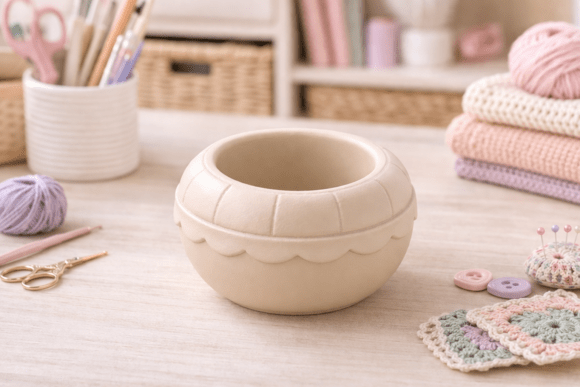
Yarn Bowl STL – Crochet Yarn Holder STL: Optimizing Your Crafting Workflow
For makers, fiber artists, and 3D printing enthusiasts, the intersection of digital fabrication and traditional craftsmanship offers unique opportunities to refine personal workflows. The Yarn Bowl STL – Crochet Yarn Holder STL represents more than just a decorative object; it is a functional tool designed to solve specific friction points in the knitting and crocheting process. By integrating this 3D printable asset into your crafting setup, you transition from managing chaotic materials to executing projects with greater precision and comfort. This guide explores how to effectively implement this yarn organizer within your creative routine, from file preparation to long-term usage.
The Role of Tension Management in Fiber Arts
To understand the utility of a dedicated yarn holder, one must first recognize the mechanical requirements of crochet and knitting. Consistent tension is the primary metric of quality in fiber arts. When a yarn ball rolls freely across a floor or tangles inside a bag, the drag coefficient changes unpredictably. These micro-interruptions force the crafter to constantly readjust their grip and tension, leading to uneven stitches and mental fatigue.
A well-designed crochet yarn bowl STL acts as a passive tension regulator. The geometry of the bowl, specifically the spiral or hook cutout, guides the yarn at a consistent angle while the weight of the printed object keeps the supply stationary. This transforms yarn management from an active distraction into a background process. For professionals and hobbyists alike, this reduction in cognitive load allows for deeper focus on complex patterns and stitch counting, directly improving the efficiency of the creative session.
Pre-Print Planning and Slicer Optimization
Successful integration of this tool begins before the printer starts. While the yarn bowl STL is optimized for FDM printing, achieving a functional result requires deliberate slicer settings. Unlike decorative prints, a yarn holder must withstand lateral force without tipping. Preparation involves adjusting parameters to prioritize structural integrity over speed.
- Infill Density: Increase infill to at least 20-30% or use a gyroid pattern to add necessary weight to the base. A lightweight bowl will slide across smooth surfaces when pulling yarn.
- Wall Count: Utilize 4 or more perimeter walls. This adds mass to the bottom and ensures the yarn guide channel is durable enough to resist abrasion from rough yarn fibers over time.
- Brim vs. Raft: Use a brim rather than a raft to ensure the bottom surface remains perfectly flat. A warped base compromises stability, rendering the tool ineffective during vigorous pulling.
- Material Selection: PLA is sufficient for most users, but PETG or ABS offers better durability if the bowl will be transported frequently or used with abrasive novelty yarns.
Furthermore, the scalability of the STL file allows for workflow customization. Before printing, assess the typical yarn weights you utilize. If you primarily work with fingering weight yarn for socks, scaling the model down by 80% creates a compact footprint ideal for travel. Conversely, scaling up to 120% accommodates bulky chenille or roving. This adaptability makes the knitting bowl STL a versatile asset rather than a single-use item.
Integration Into Active Crafting Workflows
Once printed and post-processed, the yarn bowl serves as a central node in your physical workspace. Its implementation varies depending on the phase of the project and the environment in which you work.
Stationary Desk Setup
In a dedicated craft room or home office, the yarn bowl anchors the workspace. Position it on the side of your dominant hand to create a direct line of feed from the source to the hook or needle. This ergonomic alignment reduces wrist strain associated with reaching or twisting. For users who employ multiple colors, printing several bowls allows for color-coded organization, preventing the "yarn barf" that occurs when multiple skeins share a single container. This systematic approach to material handling mirrors professional inventory management, keeping active resources accessible and reserve stock stored away.
Mobile and Travel Applications
For commuters or those who craft in shared spaces, portability is key. The compact nature of this 3D print yarn holder makes it compatible with standard tote bags and backpacks. Unlike open baskets, the enclosed spiral design prevents the yarn from escaping the bowl even if the bag tips over. In this context, the tool functions as a mobile workstation component, allowing you to maintain a tidy, professional appearance in public settings while protecting your materials from dirt and snags.
Post-Project Storage and Organization
The utility of the bowl extends beyond active stitching. During project hibernation periods, the bowl can serve as a designated parking spot for works-in-progress. By leaving the yarn threaded through the guide and the project resting inside or beside the bowl, you create a visual cue that preserves context. When you return to the project days or weeks later, the setup is identical to when you paused, eliminating the reorientation period often required to resume complex tasks.
Maintenance and Long-Term Usability
Treating your 3D printed tools as permanent fixtures in your workflow requires basic maintenance. Yarn fibers can leave residue, and oils from hands may accumulate on the print surface over time. Regular cleaning with mild soap and water maintains hygiene and prevents oil transfer to delicate fibers like silk or alpaca.
Inspect the yarn guide channel periodically for burrs or layer separation. Even minor imperfections in the plastic can snag yarn, defeating the purpose of the tool. A quick pass with fine-grit sandpaper or a nail file after printing—and occasionally during its lifecycle—ensures the glide path remains smooth. This attention to detail reflects a commitment to quality control, ensuring the tool continues to perform its function reliably.
Compatibility With Broader Maker Ecosystems
This crochet accessory STL does not exist in isolation. It interacts synergistically with other tools in the maker’s arsenal. For example, pairing the yarn bowl with a 3D printed winder creates a complete yarn preparation station. Wind your skeins into center-pull cakes, then place them directly into the bowl. This end-to-end workflow eliminates the need for commercial yarn dispensers and leverages the customizability of 3D printing to fit your specific spatial constraints.
Additionally, the digital nature of the file supports iterative improvement. Makers can modify the STL in CAD software to add features such as integrated stitch marker holders, elastic band slots for securing the yarn tail, or weighted compartments for filling with sand or coins. This level of personalization transforms a generic download into a bespoke instrument tailored to individual biomechanics and preferences.
Evaluating Efficiency Gains
Adopting specialized tools should yield measurable improvements in the user experience. When evaluating the effectiveness of this yarn bowl STL, consider the following metrics:
- Setup Time: Does threading the yarn take less than five seconds? The design should facilitate instant engagement.
- Error Rate: Track instances of tangling or knotting per hour of work. A functional bowl should reduce these events to near zero.
- Ergonomic Comfort: Monitor shoulder and wrist fatigue. Proper yarn flow reduces the physical effort required to pull material.
- Space Utilization: Assess whether the footprint optimizes your available surface area compared to previous storage methods.
If the tool fails to meet these benchmarks, revisit your print settings or scale. The advantage of 3D printing is the low cost of iteration. Print a test version at 50% scale to validate the yarn guide geometry before committing to a full-sized print. This rapid prototyping mindset ensures that the final product truly enhances your workflow rather than merely occupying space.
Sustainable Practices in Tool Creation
Finally, integrating 3D printed tools aligns with sustainable making practices. By producing a durable, reusable knitting organizer STL locally, you reduce reliance on mass-produced plastic goods shipped globally. Selecting biodegradable filaments like PLA further minimizes environmental impact. Moreover, because the file is digital, replacement parts or modified versions can be produced on-demand without waste. This circular approach to tool acquisition appeals to eco-conscious creators who value longevity and resourcefulness in their practice.
Ultimately, the Yarn Bowl STL – Crochet Yarn Holder STL is a testament to the power of functional design. It bridges the gap between digital capability and tactile tradition, offering a practical solution to age-old crafting challenges. By approaching this print with intentionality—optimizing settings, integrating it thoughtfully into your workspace, and maintaining it properly—you elevate it from a simple plastic container to an essential component of a refined, efficient, and enjoyable creative workflow.