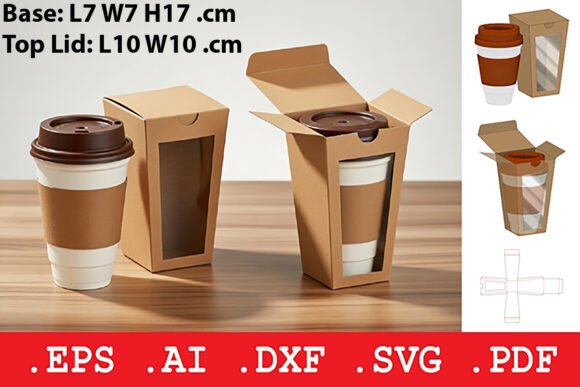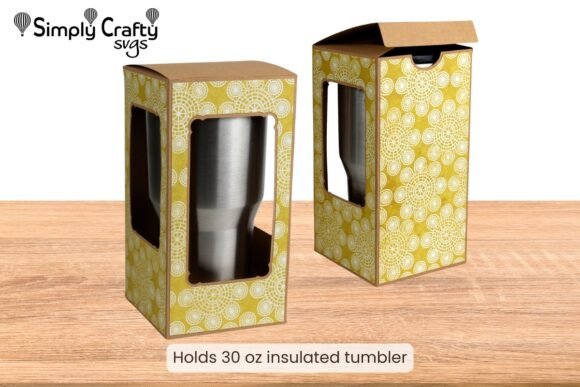
Slide Out Window Sleeve Box: Strategic Packaging for Product Positioning
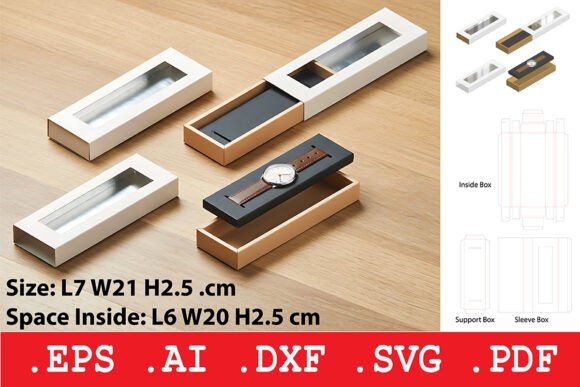
The Slide out Window Sleeve Box represents a specific intersection of structural engineering and consumer psychology in retail packaging. Unlike standard tuck-end cartons or rigid gift boxes, this two-piece system utilizes friction and precision tolerance to create an interactive unboxing moment. The design features a sleek outer sleeve with a large clear window for immediate product visibility, paired with an inner support tray that slides smoothly to reveal the item. For entrepreneurs, marketers, and product designers, selecting this format is not merely an aesthetic choice; it is a strategic decision that influences perceived value, operational efficiency, and brand communication.
Understanding the mechanical and psychological advantages of the Slide out Window Sleeve Box allows businesses to align their packaging with broader commercial goals. This template is engineered for 200–350 gsm paper stock, making it lightweight yet structurally sufficient for watches, bracelets, pens, small electronics, and luxury accessories. The absence of glue requirements for the sleeve assembly reduces production complexity and appeals to sustainability-minded consumers, while the included vector files (.DXF, .SVG, .EPS, .PDF, .AI) ensure compatibility across CNC machines, laser cutters, and industrial printing workflows.
Elevating Perceived Value Through Structural Interaction
Packaging serves as the first physical touchpoint between a brand and a customer. In competitive markets, particularly for luxury accessories and boutique electronics, the tactile experience of opening a product can justify premium pricing. The Slide out Window Sleeve Box leverages kinetic interaction to slow down the unboxing process intentionally. When a customer pulls the inner tray from the outer sleeve, the friction creates a sense of weight and quality that static boxes cannot replicate.
This interaction supports specific positioning goals. If your brand narrative focuses on sophistication, precision, or modern elegance, the packaging must reflect those attributes physically. The large clear window provides immediate visual confirmation of the product, reducing purchase anxiety in retail environments where customers want to inspect textures and finishes before buying. Simultaneously, the sliding mechanism protects the product during transit and storage, balancing display needs with functional security. For digital-first brands, this specific motion translates exceptionally well to video content, providing creators with a natural "reveal" moment that enhances social media marketing efforts without requiring additional props or editing tricks.
Operational Efficiency and Assembly Considerations
A common failure point in custom packaging is the disconnect between design ambition and fulfillment reality. Complex origami-style boxes may look impressive in a prototype but can bottleneck shipping operations during peak seasons. The Slide out Window Sleeve Box addresses this by prioritizing assembly speed without sacrificing presentation. The no-glue sleeve design relies on tab-locking mechanisms and precise folding, which streamlines the packing process for freelancers, small business owners, and fulfillment teams.
When planning inventory and logistics, consider the material specifications. This template is optimized for 200–350 gsm paper. Using cardstock lighter than 200 gsm may result in a flimsy sleeve that fails to provide adequate protection or maintain the necessary friction for the slide mechanism. Conversely, exceeding 350 gsm can make the box difficult to fold manually and may require scoring equipment to prevent fiber cracking at the creases. Before committing to a bulk print run, always test the specific paper stock with the provided .DXF or .SVG files on your intended cutting hardware. Tolerance varies between laser cutters, die-cutters, and manual crafting tools; verifying the fit of the inner tray within the outer sleeve prevents costly rework.
Strategic Alignment with Product Categories
Not every product benefits from this specific form factor. The Slide out Window Sleeve Box is strategically suited for items that are relatively flat, durable, and visually appealing. Watches, bracelets, and pens are ideal candidates because they fit the dimensional constraints and benefit from being displayed horizontally. Small electronics, such as earbuds or smartwatches, also perform well in this format because the window allows customers to verify color and model variants instantly.
However, decision-makers must evaluate whether this packaging supports their specific use case. If you sell fragile glassware, irregularly shaped organic products, or items requiring extensive regulatory text on the primary package, this template may introduce unnecessary risk or compliance challenges. The window exposes the product to light and potential surface abrasion, which is acceptable for metal accessories but detrimental to photosensitive goods. Furthermore, if your brand positioning relies on mystery or surprise, a visible window contradicts that narrative. Use this template when transparency and accessibility are core components of your value proposition.
Leveraging Digital Assets for Customization and Prototyping
The inclusion of multiple file formats transforms this packaging template from a static design into a flexible asset for various production stages. Understanding how to utilize each format maximizes return on investment and reduces time-to-market.
- .DXF Files: Essential for CNC routing and industrial laser cutting. These files contain pure geometric path data without styling, ensuring machines interpret cut lines and score lines accurately. Use these for mass production or high-precision prototyping.
- .SVG Files: Scalable vectors ideal for digital design integration and craft cutters like Cricut or Silhouette. Marketers can import these directly into web design tools to create accurate 2D representations of packaging for landing pages or pitch decks before physical samples exist.
- .EPS Files: The industry standard for professional printing. Send these to commercial print shops to ensure typography, bleed areas, and color profiles remain intact during offset or digital press runs.
- .PDF Files: Print-ready documents for manual verification and stakeholder review. Use these to check dimensions at 100% scale on standard office printers before investing in specialty cardstock.
- .AI Files: The source Adobe Illustrator file allows for deep customization. Designers can modify window size, adjust tray depth, add brand patterns, or integrate structural changes to accommodate unique product dimensions.
Effective planning involves using these assets sequentially. Begin with the PDF for dimensional validation. Move to SVG or DXF for prototyping on available hardware. Finalize branding in the AI file, then export EPS for production. Skipping validation steps often leads to sizing errors that only become apparent after expensive materials have been purchased.
Mitigating Risks in Packaging Selection
Adopting the Slide out Window Sleeve Box without clear objectives introduces avoidable risks. One primary concern is structural integrity over time. Friction-based closures rely on paper memory; repeated sliding can wear down tabs and loosen the fit. If your product is intended for long-term storage or frequent reuse by the customer, consider specifying a higher GSM within the recommended range or applying a protective coating to reduce friction wear. Alternatively, acknowledge that this packaging is designed primarily for retail presentation and initial unboxing rather than archival storage.
Another risk involves supply chain consistency. Paper thickness tolerances vary between manufacturers and even between batches. A template calibrated for 300 gsm stock may fail if the actual material measures 280 gsm due to humidity or manufacturing variance. Always request paper samples from suppliers and test the fit before ordering full quantities. Additionally, ensure your fulfillment team understands the assembly sequence. While glue-free is efficient, improper locking can lead to boxes opening during transit. Create simple assembly guides or video tutorials for staff to maintain consistency.
Integrating Packaging into Long-Term Brand Strategy
Packaging decisions should support long-term business outcomes rather than serving as isolated aesthetic choices. The Slide out Window Sleeve Box offers scalability for growing businesses. Because the design uses standard paper weights and common cutting formats, transitioning from hand-assembled prototypes to automated die-cutting is straightforward. This continuity preserves brand recognition as volume increases.
For educators and creators teaching packaging design, this template serves as an excellent case study in tolerance management and user experience design. It demonstrates how structural elements communicate brand values without relying solely on graphics. For bloggers and publishers reviewing products, understanding this packaging type helps articulate why certain unboxing experiences feel more premium than others, adding depth to content analysis.
Ultimately, the effectiveness of the Slide out Window Sleeve Box depends on intentional application. It excels when used to enhance product visibility, streamline assembly, and create memorable tactile interactions for appropriate product categories. By leveraging the provided digital assets responsibly and validating material compatibility early in the planning process, businesses can transform packaging from a cost center into a strategic differentiator. Evaluate your specific goals, test rigorously, and implement with precision to achieve results that extend beyond the shelf.