Elevating Stationery with the Folding Invitation Card Envelope
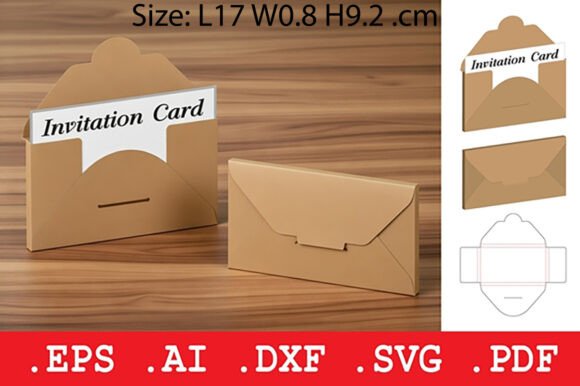
In an era dominated by digital communication, the tactile experience of receiving physical mail has transformed from a mundane daily occurrence into a curated moment of connection. For designers, event planners, and small business owners, the presentation of an invitation or greeting card is no longer an afterthought; it is the opening act of the brand or personal experience. The Folding Invitation Card Envelope addresses this shift by offering a sophisticated, self-contained packaging solution that merges traditional elegance with modern manufacturing precision. Unlike standard gummed envelopes that require adhesive and often lack structural integrity, this template utilizes a classic flap closure with a secure slot-in tab, ensuring the contents remain protected without the need for glue or stickers.
This design is specifically optimized for 180–350 gsm paper, striking a critical balance between flexibility and durability. Paper in this weight range is substantial enough to convey quality and resist bending during transit, yet pliable enough to fold crisply along scored lines without cracking. The non-rigid folding design provides a clean aesthetic that feels bespoke rather than industrial. Whether you are packaging luxury stationery, gift cards, or formal wedding invitations, the slim profile of this envelope ensures it remains postage-friendly while delivering a premium unboxing experience that resonates with recipients who value craftsmanship.
The Shift Toward Tactile Design and Sustainable Packaging
Current market preferences indicate a significant pivot away from excessive packaging toward minimalist, functional design. Consumers and clients are increasingly sensitive to waste, favoring solutions that serve multiple purposes. The folding envelope template embodies this trend by eliminating the need for separate plastic sleeves, tissue paper, or adhesive seals. By integrating the closure mechanism directly into the die-cut structure, creators can reduce material consumption while enhancing the user experience. This aligns with broader sustainability goals without sacrificing the perceived value of the product.
Furthermore, the rise of the "maker economy" and small-batch production has changed how stationery is manufactured. Large minimum order quantities from traditional printers are often prohibitive for freelancers, educators, or boutique brands testing new designs. The availability of precision dielines allows these users to produce professional-grade packaging in-house or through local fabrication services. This democratization of manufacturing means that a solo entrepreneur can achieve the same level of finish as a major corporation, provided they have access to high-quality vector templates and the right paper stock. The ability to store these envelopes flat and assemble them on demand also solves logistical challenges for businesses with limited warehousing space.
Technical Versatility Across Digital and Analog Workflows
A defining feature of this template is its comprehensive file ecosystem, which bridges the gap between digital design software and physical fabrication hardware. Modern creative workflows rarely exist in a single application; they move fluidly between screen and machine. Understanding the specific utility of each included file format is essential for maximizing efficiency and quality.
Precision Fabrication with DXF and SVG
For users utilizing CNC routers, laser cutters, or digital craft plotters like Cricut or Silhouette, the .DXF and .SVG files are the workhorses of production. The .DXF (Drawing Exchange Format) provides universal compatibility with industrial cutting hardware, ensuring that the slot-in tab and fold lines are rendered with exact tolerances. This precision is non-negotiable; if the tab is even half a millimeter too wide, the closure will fail, and if it is too narrow, the envelope will feel loose. The .SVG format serves a similar purpose for smaller-scale digital cutting machines, retaining scalable vector data that prevents pixelation or jagged edges during the cutting process. These formats allow for rapid prototyping, enabling designers to test different paper weights and adjust kerf compensation before committing to a full production run.
Professional Printing and Customization via EPS, PDF, and AI
While digital cutting handles the structure, print quality defines the visual impact. The .EPS and .AI (Adobe Illustrator) files are industry standards for high-quality printing and customization. Because these are vector-based, designers can scale artwork, add foil stamping guides, or integrate complex patterns without losing resolution. The .AI source file offers full editability, allowing professionals to modify the dieline itself if they need to adjust dimensions for a non-standard card size. Meanwhile, the .PDF serves as a reliable reference for manual assembly and proofing. It acts as a visual contract, ensuring that what appears on screen matches the physical output, which is particularly useful when communicating with external print vendors or clients who may not have specialized design software.
Practical Implications for Business and Creative Professionals
Integrating the Folding Invitation Card Envelope into your workflow offers tangible benefits beyond aesthetics. For marketing professionals and business owners, packaging is a direct extension of brand identity. A generic white envelope signals utility, whereas a custom-fabricated, slot-tab enclosure signals attention to detail. This distinction matters in competitive markets where differentiation is key. Real estate agents closing deals, photographers delivering prints, and consultants sending welcome packets can all leverage this template to reinforce a premium brand position without incurring the costs associated with custom box manufacturing.
For educators and hobbyists, the template serves as an excellent teaching tool for understanding structural design and material properties. Working with 180–350 gsm paper requires an understanding of grain direction and scoring depth. Learning to manipulate these variables fosters a deeper appreciation for print production and prepares students or enthusiasts for more complex packaging projects. The flat-pack nature of the design also makes it ideal for workshops or kits, as hundreds of units can be stored in a single drawer and assembled as part of a hands-on activity.
Optimizing Assembly and Mailing Efficiency
One of the most practical advantages of this specific envelope design is its mailing efficiency. Traditional rigid boxes or padded mailers add significant bulk and weight, driving up shipping costs. The slim profile of this folding envelope keeps shipments within standard letter or large envelope thresholds in many postal systems, provided the contents are similarly flat. This cost-saving aspect is crucial for e-commerce sellers and independent artists operating on thin margins.
Assembly speed is another critical factor for scalability. While hand-folding can be meditative for small batches, larger runs require a systematic approach. Users should consider creating simple jig boards or using bone folders to ensure consistent creases. The slot-in tab mechanism is designed for intuitive assembly, but practicing with scrap paper first helps establish muscle memory. For businesses anticipating high volume, this template’s compatibility with automated scoring and cutting equipment means that production can be scaled up without redesigning the packaging entirely. The transition from manual craft to semi-automated production is seamless because the underlying geometry remains constant.
Selecting the Right Materials for Longevity and Feel
While the template is optimized for 180–350 gsm paper, the choice of paper type significantly influences the final result. Uncoated stocks generally provide better friction for the slot-in tab, ensuring a secure hold. Highly coated or glossy papers, while visually striking, can sometimes be too slippery for adhesive-free closures to function reliably over time. Textured papers like linen or felt add a sensory dimension that enhances the unboxing experience but may require adjustments to laser cutter settings or blade depth to prevent fraying at the edges.
Sustainability considerations should also guide material selection. Recycled cardstocks and FSC-certified papers are widely available in the target weight range and pair well with the eco-conscious ethos of glueless packaging. When sourcing paper, always request samples to test the fold quality and tab engagement before purchasing in bulk. A paper that looks beautiful flat may crack unsightly when folded, or conversely, may be too springy to hold the tab securely. Testing is the bridge between a digital file and a successful physical product.
Future-Proofing Your Stationery Workflow
The relevance of the Folding Invitation Card Envelope extends beyond current trends; it represents a fundamental shift toward agile, responsive design practices. As technology continues to lower the barriers to entry for custom fabrication, the expectation for personalized, high-quality touchpoints will only increase. Professionals who master the interplay between digital files and physical materials position themselves to meet this demand effectively.
Moreover, owning the source files (.AI and .EPS) future-proofs your investment. Trends in color, typography, and branding evolve, but a well-engineered structural template remains valid indefinitely. You can update the surface graphics seasonally or per client while maintaining the same reliable packaging infrastructure. This modularity reduces long-term design fatigue and operational overhead. Ultimately, this envelope template is not just a container for a card; it is a foundational asset for any creator or business committed to excellence in physical communication. By combining precise engineering with versatile file formats, it empowers users to deliver experiences that are as thoughtful in their construction as they are beautiful in their presentation.