Evaluating Green Starry Night Nature Shadow Box Art for DIY Decor
The intersection of digital crafting and traditional paper art has created a niche for immersive, layered decor that standard prints cannot replicate. Green Starry Night Nature Shadow Box Art represents a specific category of 3D papercraft that utilizes depth, lighting, and silhouette to create atmospheric scenes. Unlike flat wall art or pre-assembled decorative boxes, this format requires active assembly from digital files, offering a distinct balance between creative engagement and professional-grade aesthetics. For adults considering this medium for home decor or gifting, understanding the technical specifications, material requirements, and comparative advantages against other art forms is essential for making an informed decision.
Distinguishing Features of Layered Papercraft
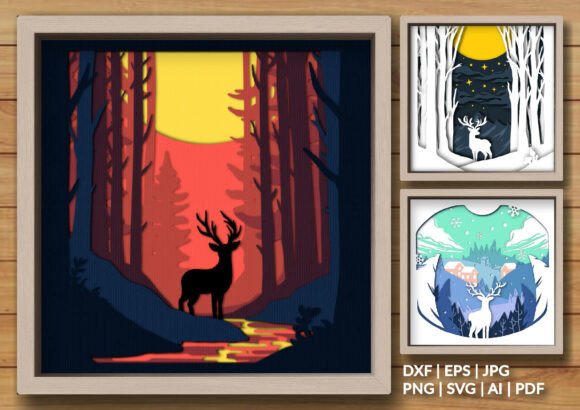
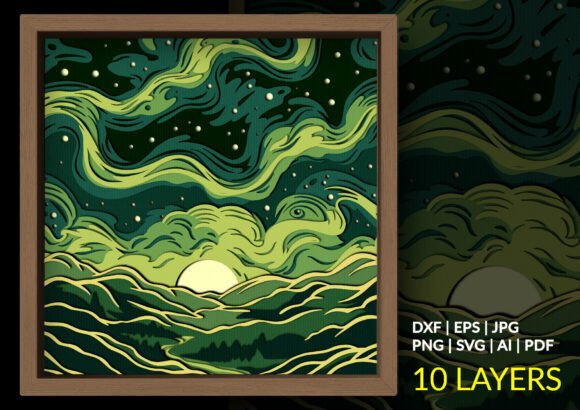
Green Starry Night Nature Shadow Box Art is defined by its reliance on negative space and backlighting rather than pigment. While traditional shadow boxes might contain physical objects like dried flowers or memorabilia, this digital design uses ten distinct layers of cardstock to construct a scene. The "Green Starry Night" theme specifically leverages color theory; the varying shades of green in the foreground pine forest and rolling hills create natural depth cues, while the illuminated moon and stars provide focal points through transparency.
The primary distinction of this specific design lies in its vector-based architecture. Because it is generated as scalable vector graphics (SVG, DXF, EPS, AI), the artwork maintains mathematical precision at any size. This differs significantly from raster-based printables where resizing can lead to pixelation or loss of detail. For crafters using cutting machines like Cricut or Silhouette, or those utilizing laser cutters, this vector foundation ensures that registration marks align perfectly during assembly. The ten-layer structure is not arbitrary; it is calculated to prevent light bleed-through in unwanted areas while allowing intentional glow effects, creating a sense of volume that two-dimensional prints lack.
Comparing Digital Downloads to Pre-Assembled Alternatives
When evaluating decor options, buyers often choose between digital craft files and finished physical products. Understanding the tradeoffs helps determine which route aligns with current needs.
- Cost Efficiency vs. Labor Investment: Digital files for Green Starry Night Nature Shadow Box Art typically cost a fraction of pre-assembled light boxes. However, the monetary savings are exchanged for time investment. Assembling ten layers, managing adhesive placement, and integrating LED strips can take several hours. Pre-assembled units offer instant gratification but come with higher shipping costs and retail markups.
- Customization Potential: A digital file allows for complete control over the final output. Users can adjust the frame size to fit specific shelving, change paper colors to match existing room palettes, or modify the brightness of the backlighting. Physical products are static; if the green hue does not match the living room walls, the buyer has no recourse without repainting.
- Quality Control: With digital downloads, the maker controls the quality of materials. You select archival-grade cardstock to prevent yellowing and high-CRI LEDs for accurate color rendering. Mass-produced alternatives often use thinner paper and cooler, less efficient lighting that may degrade faster or cast unflattering shadows.
- Skill Requirement: Pre-assembled art requires zero technical skill. Digital shadow box art assumes proficiency with cutting software, blade calibration, and layering techniques. Beginners may face a learning curve regarding weeding intricate pine tree details or achieving clean glue lines.
Technical Considerations for Successful Assembly
The success of Green Starry Night Nature Shadow Box Art depends heavily on material selection and equipment capability. While the digital file provides the blueprint, the physical execution determines the longevity and visual impact of the piece.
Paper Weight and Opacity
Not all cardstock performs equally in layered designs. For a ten-layer project involving backlighting, paper weight is critical. Standard 65lb cardstock may be too translucent, causing the internal LED lights to wash out the distinct separation between the forest layers. Conversely, heavyweight construction paper may block light entirely, defeating the purpose of the glowing moon and stars. Most experienced crafters recommend 80lb to 100lb white or colored cardstock for optimal opacity and structural rigidity. Testing a single layer against your intended light source before cutting the entire project prevents wasted material.
Cutting Machine Compatibility
The provided file formats cover the spectrum of modern fabrication tools. SVG files are native to Cricut Design Space and Silhouette Studio, making them accessible for hobbyists. DXF files serve users with older Silhouette models or AutoCAD-based workflows. Laser cutter users benefit from the EPS and AI formats, which preserve exact path data without the node limitations sometimes found in converted SVGs. When comparing tools, laser cutters generally produce cleaner edges on intricate pine needle details compared to mechanical blades, though blade-cutters remain sufficient for most home applications if blades are fresh and settings are calibrated.
Best-Fit Scenarios and Limitations
This art form serves specific aesthetic and functional purposes better than others. Evaluating whether Green Starry Night Nature Shadow Box Art fits your situation involves assessing both the environment and the user's intent.
Ideal Use Cases:
- Nature-Themed Interiors: The organic shapes and forest palette complement rustic, cabin, or biophilic design schemes where synthetic art feels out of place.
- Low-Light Environments: Because the design relies on backlighting, it excels in bedrooms, hallways, or reading nooks where ambient lighting is preferred over overhead fixtures.
- Experiential Gifting: For recipients who value handmade effort over commercial goods, the assembled piece carries emotional weight that store-bought decor lacks.
- Therapeutic Crafting: The repetitive nature of layering and assembling can serve as a mindfulness practice for adults seeking tactile engagement away from screens.
Limitations and Constraints:
- Brightly Lit Spaces: In rooms with abundant direct sunlight or strong overhead lighting, the backlit effect diminishes. The art functions best when ambient light is controlled or lower than the internal LEDs.
- Dust Accumulation: Open-front shadow boxes attract dust. Without a glass or acrylic cover, maintenance requires careful cleaning to avoid damaging paper layers.
- Immediate Decor Needs: If you need to furnish a space today, this is not the solution. Sourcing materials, cutting, and assembling introduces a timeline of days or weeks depending on skill level.
- Color Consistency: Screen colors rarely match printed paper exactly. The "green" seen in the digital preview may differ from available cardstock, requiring physical swatch testing for perfectionists.
Making an Informed Decision
Choosing Green Starry Night Nature Shadow Box Art over other decor options ultimately hinges on valuing process alongside product. It is a superior choice for individuals who view decor as an extension of personal creativity and who possess—or wish to develop—fabrication skills. The digital format offers unmatched flexibility in sizing and color adaptation, addressing common complaints about mass-produced art fitting poorly into curated spaces.
However, for those prioritizing convenience, durability in high-traffic areas, or precise color matching without experimentation, framed prints or sealed resin art may offer better practical utility. The digital download model shifts production responsibility to the user, which is either a feature or a bug depending on individual preferences. By weighing the immersive depth of ten-layer papercraft against the simplicity of flat media, and considering the ongoing commitment to material sourcing and assembly, buyers can confidently select the format that best enhances their living environment. This evaluation ensures that the chosen art piece serves both its aesthetic function and the lifestyle of its creator.